It usually starts as a tightness in the groin or the front of the hip that you notice in the last few kilometres of a long run. A few weeks later it’s there on easy runs, getting out of the car is uncomfortable, and you’re not sure whether to stretch it, rest it, or run through it.
Groin and hip pain is less common in runners than knee or Achilles trouble, but it’s one I take more seriously, because it covers a wider range of problems. Most of them are very manageable. One or two need to be ruled out early. Here’s how I think about it, and what you can do about it.
Where Is the Pain, Exactly?
“Groin pain” is a location, not a diagnosis. In 2015 a group of sports medicine experts met in Doha and agreed on a simple way to sort it out, based mostly on where it hurts and what provokes it. The main categories are:
- Adductor-related. Pain on the inside of the upper thigh, near where the inner thigh muscles attach to the pubic bone. Squeezing your knees together against resistance usually reproduces it.
- Iliopsoas (hip flexor)-related. Pain at the front of the hip, often provoked by lifting your knee against resistance or by a stretch through the front of the hip.
- Inguinal-related. Pain in the area of the inguinal canal, often worse with coughing, sit-ups or sprinting. This is what people sometimes call a “sports hernia”.
- Pubic-related. Pain right over the pubic bone at the front.
- Hip joint-related. A deeper, pinchy pain in the front of the hip, often with sitting for long periods, deep squatting, or putting on socks and shoes. Clicking or catching can come with it.
Plenty of runners have a mix of more than one, and pain on the outside of the hip is a different story again. You don’t need to diagnose yourself. But knowing roughly where your pain sits and what sets it off makes it much easier to manage, and it’s the first thing I’ll ask about.
Why Runners Get It
Like most running injuries, groin and hip pain usually comes down to load outpacing capacity. The common triggers I see:
- A sudden jump in training. A new marathon block, more weekly kilometres, or adding speed work and hills at the same time.
- More speed and hills. Faster running and uphill running ask a lot more of the hip flexors and adductors than easy running on the flat.
- Trail running. Uneven ground, side-stepping roots and steep descents on the North Shore load the inner thigh in ways road running doesn’t.
- Strength that hasn’t kept up. The adductors and hip muscles are often under-trained in runners. When they’re weak, they fatigue early and get irritated.
- Not enough fuel or recovery. Under-eating relative to training, poor sleep and stress all reduce how much load your tissues and bones can tolerate. This matters most for the bone stress injuries below.
The One You Can’t Ignore: Bone Stress
This is the reason groin pain in runners deserves a proper look. A stress fracture of the femoral neck (the top of the thigh bone, just below the hip joint) or the pubic bone can feel a lot like a muscle strain at first: a vague ache in the groin or front of the hip that gets worse the more you run.
Most groin pain isn’t a stress fracture. But a femoral neck stress fracture that gets run on can become a serious injury, so it’s worth knowing the warning signs:
- Pain that builds steadily during a run rather than warming up and easing off
- Pain with walking, standing on one leg, or hopping on the sore side
- An ache at night or at rest
- A recent big increase in training, a history of stress fractures, or a period of under-eating or missed periods
If that sounds like you, stop running and get assessed promptly. This usually needs imaging, and an X-ray is often normal early on, so an MRI may be needed. Don’t try to train through it.
What to Do in the Meantime
If your pain is mild, warms up during a run rather than building, and you can hop on that leg without pain, it’s much more likely to be a muscle or tendon issue. In that case, complete rest usually isn’t the answer. Adjusting your training is.
- Drop the provocative stuff first. Pause speed work, hill repeats and technical trails. Keep easy, flat running if it’s comfortable. The Seawall is your friend here.
- Trim the long run. Shorten it rather than cutting weekly volume to zero.
- Use a simple pain rule. Mild discomfort during a run (around 3 out of 10 or less) that settles within 24 hours and isn’t worse the next morning is generally okay. If it isn’t, scale back the next run. There’s more on this in Should You Train Through Pain?
- Go easy on aggressive stretching. A sore adductor or an irritable hip joint often doesn’t like being stretched hard. If a stretch makes it worse, stop doing it.
What Actually Fixes It
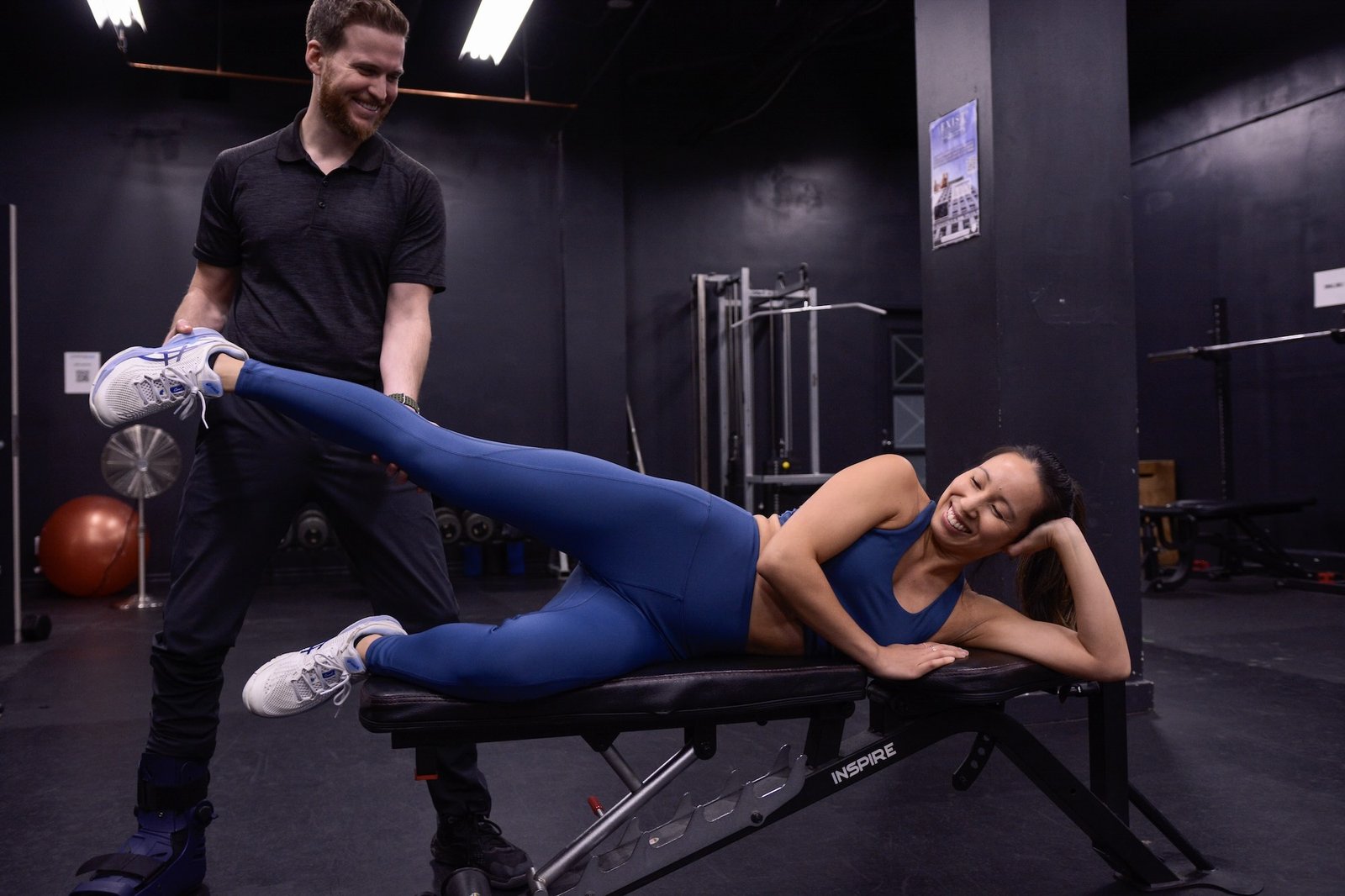
Progressive strength work is the core of treatment for most muscle- and tendon-related groin pain. For the adductors that might start with isometric squeezes (a ball or pillow between your knees) and progress to side-lying adductor lifts, and eventually the Copenhagen plank, which has good evidence for building adductor strength and reducing groin problems in field sports. For the hip flexors it’s similar: start with holds, then build to loaded knee drives and running-specific drills.
The rest of the hip matters too. Glute strength, single-leg control and trunk strength all help share the load, so a good program covers the whole chain rather than one muscle.
Progression is the key. Exercises need to get harder over weeks, not stay the same. The goal is a hip that handles more than your running asks of it, which is the same principle behind managing runner’s knee.
Then rebuild running gradually. Volume first, on flat ground. Hills, trails and speed come back later, one at a time, once the strength work is well established and your symptoms stay quiet.
Hip joint-related pain follows similar principles, with extra attention to which positions irritate it (deep flexion, long periods of sitting) and how to work around them while you build strength.
When to Get It Assessed
Book an assessment if:
- The pain has lasted more than two or three weeks despite cutting back
- It’s affecting walking, sitting, or getting in and out of the car
- Your hip clicks, catches, or feels like it locks
- You have a race coming up and need a plan you can trust
Stop running and see a doctor or physio promptly if you have any of the bone stress signs above: pain that builds during runs, pain with hopping or walking, or night pain. Also get medical attention quickly for a visible bulge in the groin, pain with fever or feeling unwell, testicular pain, or if the pain started with a fall or impact.
How I Treat Groin and Hip Pain at GroundSwell
An assessment starts with your training history, your fuelling and recovery, and exactly where and when it hurts. From there I’ll test the adductors, hip flexors and hip joint to narrow down what’s driving it, and screen for bone stress. If imaging or a referral to a sports medicine doctor is needed, I’ll tell you.
Then you get a clear plan: how much running to do right now, and a strength program built in the gym at Groundwork Athletics that progresses as you do. Whether you’re training for the BMO Vancouver Marathon or just want your Stanley Park loop back, the aim is to keep you running while you get better, not to bench you.
Read more about running and endurance physiotherapy at GroundSwell, or book an assessment online.
Leave a Reply